
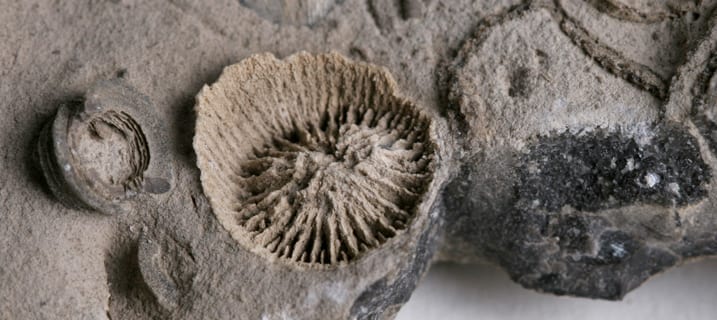
This entire area was once an ancient ocean as seen by the many fossils found in the sedimentary rock. It was then covered by a glacier which left all the large rocks we see in the soil and shoreline when it receded. As a matter of fact the Great Sacandaga Lake existed once in the ancient glacial times as Glacial till filled the spot where the dam is now and the glacial ice melted filling the valley inn, but the river washed all the till away and we were left with the fertile Sacandaga Valley. Sacandaga is an old Mohawk word meaning “the land of waving grass”.
Before The Flood
Indigenous People
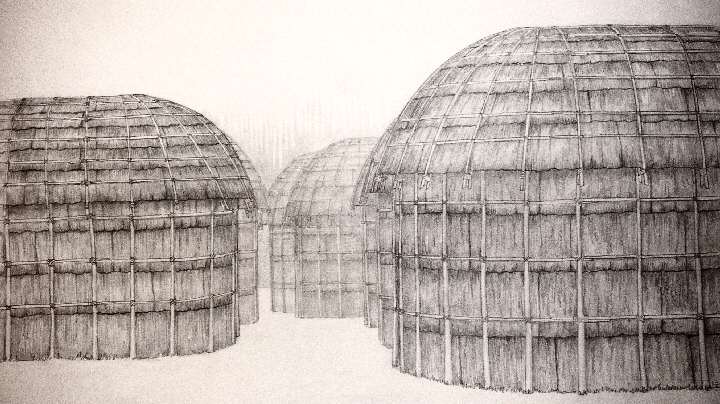
Over 900 years ago, The valley was then inhabited by the indigenous people of the area who, after fifty years of war, formed a great peace known as the Iroquois Alliance and included The Mohawk, Oneida, Onondaga, Cayuga, and Seneca nations. The Sacandaga Valley was inhabited mainly by the Bear Clan of the Mohawk and the Turtle and Wolf Clans lived near by. These natives did not live in tepees, but in villages of longhouses which were located on hills and well guarded. These families grew corn, beans, and squash. They supplemented their diet with hunting and wild fruits.
The Colonies
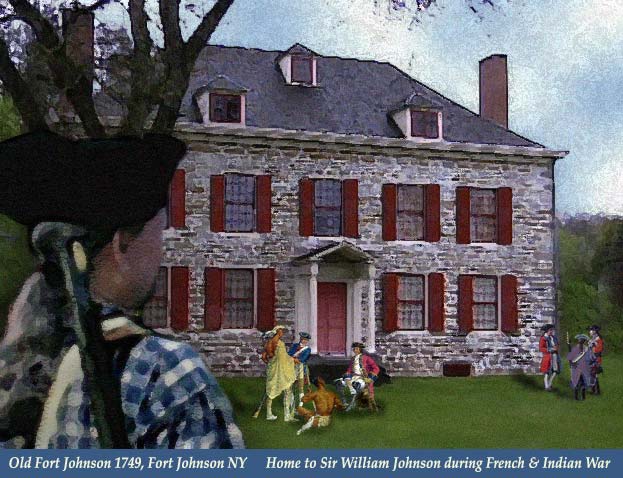
Sir William Johnson left Ireland at the age of 23 and came to settle in the Mohawk river valley he brought 12 families with him in 1738 and had increased the number to 26 by 1742.As a result of Sir William’s real estate transactions, he acquired more than 200,000 acres, which led him to encourage Irish and Scottish Highlanders to migrate to Johnstown, a community consisting of mills, shops, smiths and other structures including Johnson Hall, his residence.
Johnson became an Indian merchant and through trust and good will developed a close relationship with the Iroquois Alliance. He was named Warraghiyagey (‘doer of great things or ‘chief big business’) by the Alliance. the Mohawk followed Johnson into the French and Indian war in 1754 and despite politics was successful at the war’s end in 1760. Keeping the Mohawk on the British side throughout the American Revolution.
The F. J. & G
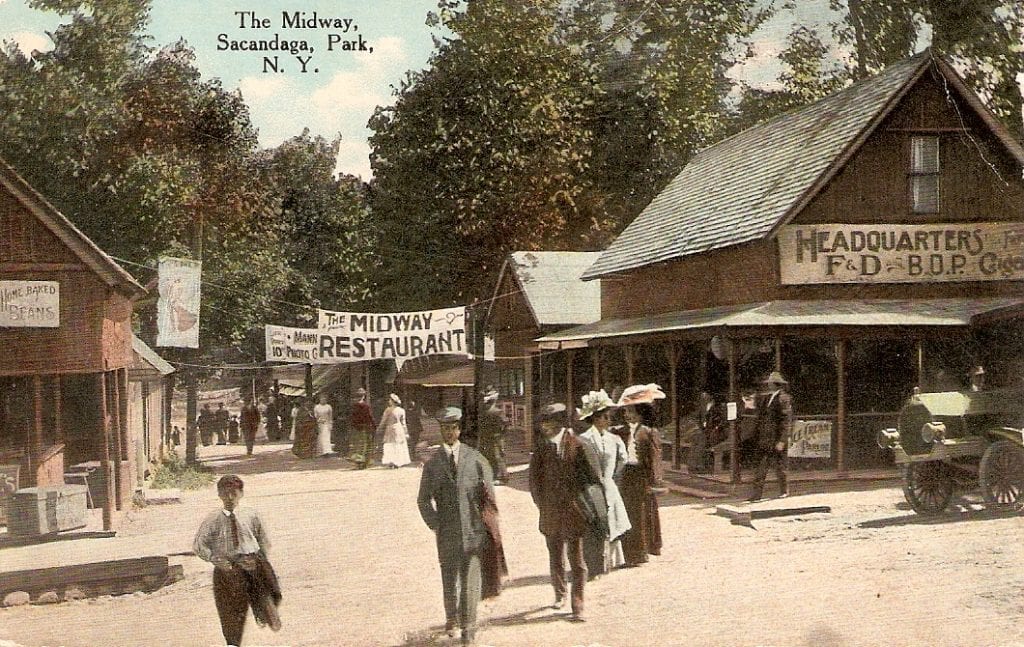
The Sacandaga River was used for logging and attracted many spectators. In 1867 F.J. and G railroad acquired the 16 miles of railroad and built a picnic area which was the beginning of the ” Coney Island of the North.
In 1888 The Adirondack Inn was built with room for 250 guests and an elevator! Cottages sprung up, a theater and Golf course were built, followed by a huge midway with carousels.
The Sport Island Complex was built and was home to the New York State Baseball League. There were boxing matches, wrestling and $5,000.00 of fireworks every Independence Day! Unfortunately most of these buildings burnt in various fires and the Sacandaga Park was condemned in preparation for the reservoir in 1926.
The Resevoir
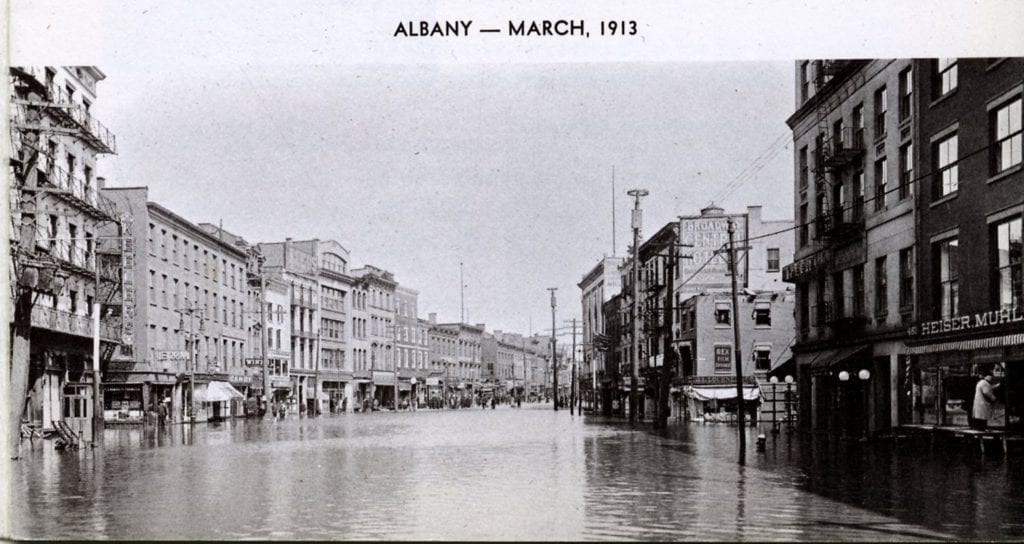
As early as the 1800’s discussions of building a dam took place, but were dismissed as technologically impossible. The Great Sacandaga River flooded every spring and damaged many communities downstream. Despite the flooding problems in the Spring, the river would dry up in the summer shutting down mills and factories and creating health hazards. But by the late 1800’s there were possibilities and the idea of the dam was proposed.
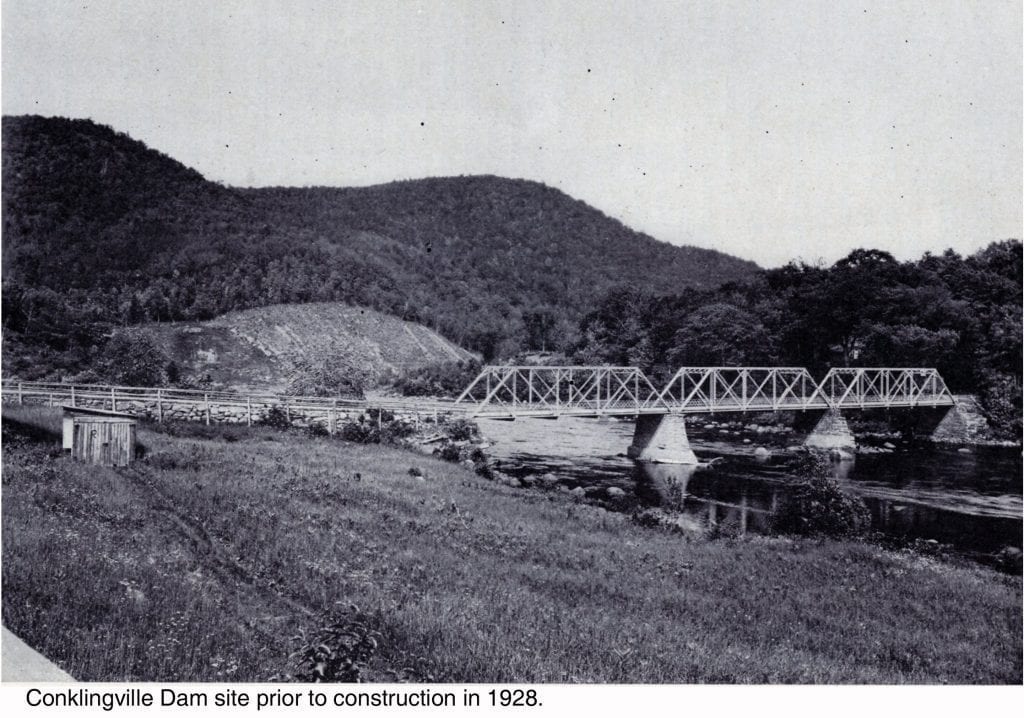
Thus the Conklingville Dam was begun in the 1920’s. The cost of the dam would be $12,000,000.00. No tax dollars were used, It was paid for by the businesses benefiting from the flood protection!
This was no easy task. This was the biggest reservoir in the area ever to be built. Farms, wood lots and entire communities would be replaced by 283 billion gallons of water! Fifty miles of new roads needed to be constructed, and 10 new bridges needed to be built, 12,000 homes had to be moved or destroyed; 3,872 people from 22 different cemeteries had to be trans-buried.
Trained at London Central Saint Martin school of arts & specialising in the Music and Movie industries, I also have a strong background in Marketing, Communication and Sales that allows me to understand Trained at London Central Saint Martin school of arts & specialising in the Music and Movie industries, I also have a strong background in Marketing, Communication
